Preliminary Results from the START Smart Study
(Symptom Tracking for ADHD in Real Time using Smartphones)
The START Smart research study was conducted from October of 2020 through April of 2022. We’re excited to share some of our preliminary findings!
START Smart participants – 72 young adults ages 18-21 with ADHD – completed two virtual video visits about 3 weeks apart from each other. During the 3 weeks in between, participants completed either 1 (low-dose group) or 5 (high-dose group) daily survey(s) on their smartphones and viewed feedback on how one target symptom was changing. The purpose of this study was to see if this may be a feasible, helpful way for young adults with ADHD to become more aware of & help with their everyday ADHD symptoms.
*Note: All the results are shown in aggregate (averaged) and are de-identified, meaning no one viewing these results can see which participants gave which responses.
Who were the START Smart participants?
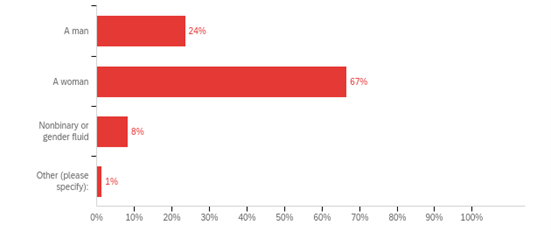
Gender Identity
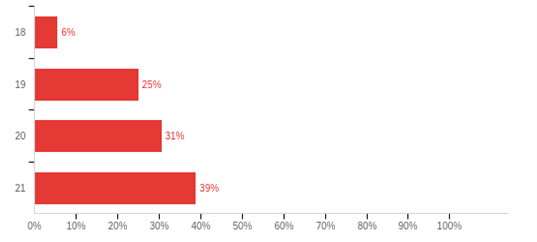
Age
Approximate Age of ADHD Diagnosis
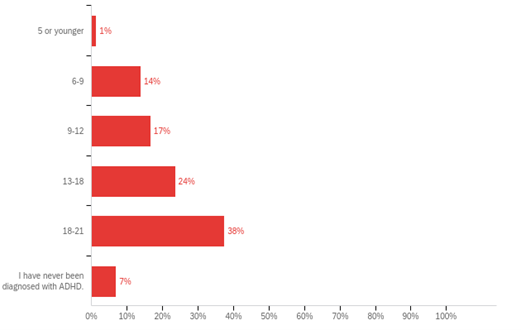
Note: Participants who had not been diagnosed with ADHD prior to this study met criteria for an ADHD diagnosis according to a clinical interview at the baseline video visit.
Did participants use an app before the study to help manage their ADHD?
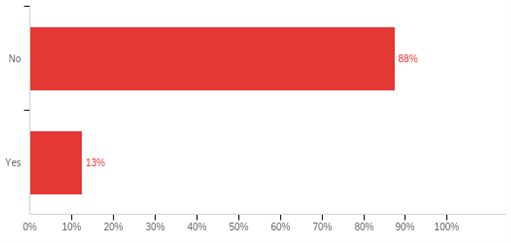
Those who responded "Yes" reported using the following apps
- Phone's default apps, including:
- Calendar
- Notes
- Alarm
- Reminders
- OneNote
- Todoist
- Cocoon
- Vriends
- Headspace
How many participants were in counseling or therapy for ADHD?
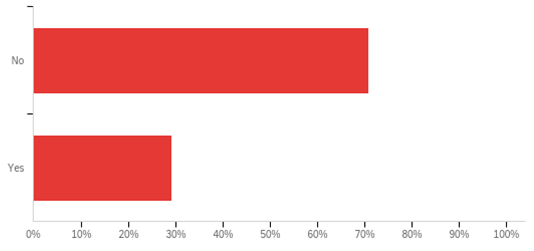
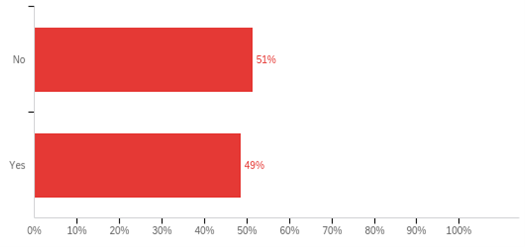
How many participants were prescribed medication for ADHD?
Preliminary Findings
Did ADHD symptoms improve from before to after the intervention?
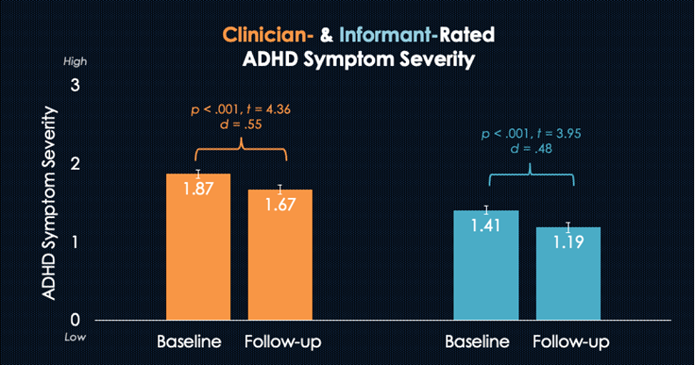
- Yes - Reported ADHD symptoms improved from the baseline visit (before the intervention) to follow-up visit (after the intervention).
- This was true for both the clinician and other reporter ratings of ADHD symptoms.
- This may suggest that reflecting on one’s ADHD symptoms every day may help better manage them.
- Further research is needed that more rigorously tests these findings.
Was there a difference in how much ADHD symptoms improved between the low-dose and high-dose groups?
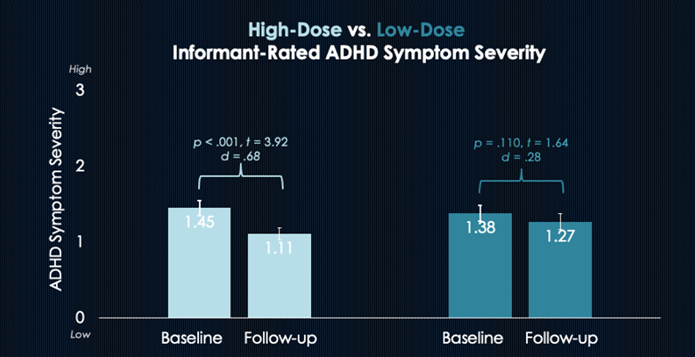
- Yes - Other reporters rated participant ADHD symptoms improving more for the high-dose group (who received 5 surveys per day) compared to the low-dose group (who received 1 survey per day).
- However, improvement in clinician-rated symptoms was the same in the high-dose and low-dose group.
- This may suggest that reflecting on ADHD symptoms throughout the day multiple times a day may improve awareness and management of those symptoms (as rated by other people in the individual’s life); again, further research is needed to test this.
Did reflecting on ADHD symptoms seem to help in the moment?
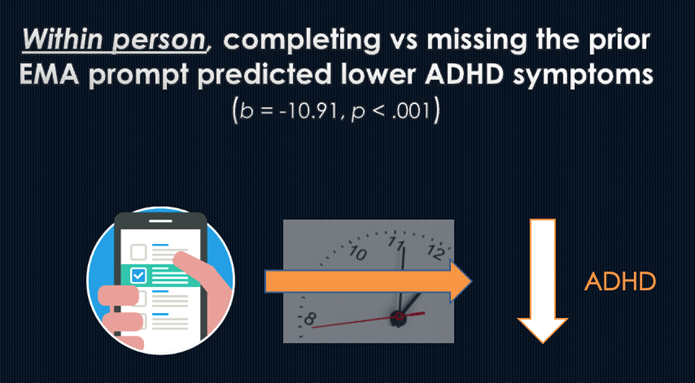
- Yes - When participants completed a survey, they typically rated their ADHD symptoms to be better at the next survey compared to if they had missed the previous survey.
- This may suggest that being more aware of one’s symptoms helps keep them in mind within the day and more effectively manage them.
What did participants think? Did anyone find START Smart to be helpful for their ADHD symptoms?
- Yes – 85% of participants Agreed or Strongly Agreed that answering the questions were helpful for their ADHD.
- Not everyone agreed, of course! Future research will look at who this approach might be most helpful for.
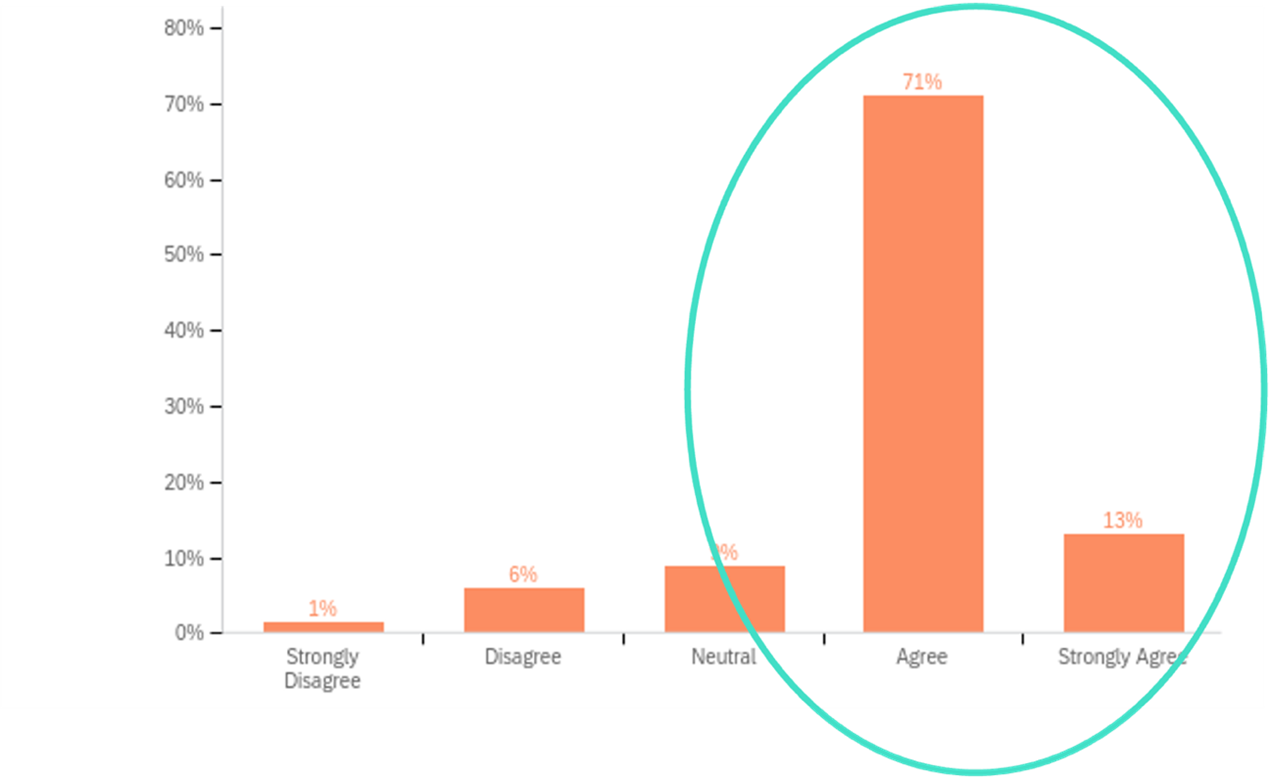
- 90% of participants felt that answering the questions made them more aware of their ADHD symptoms.
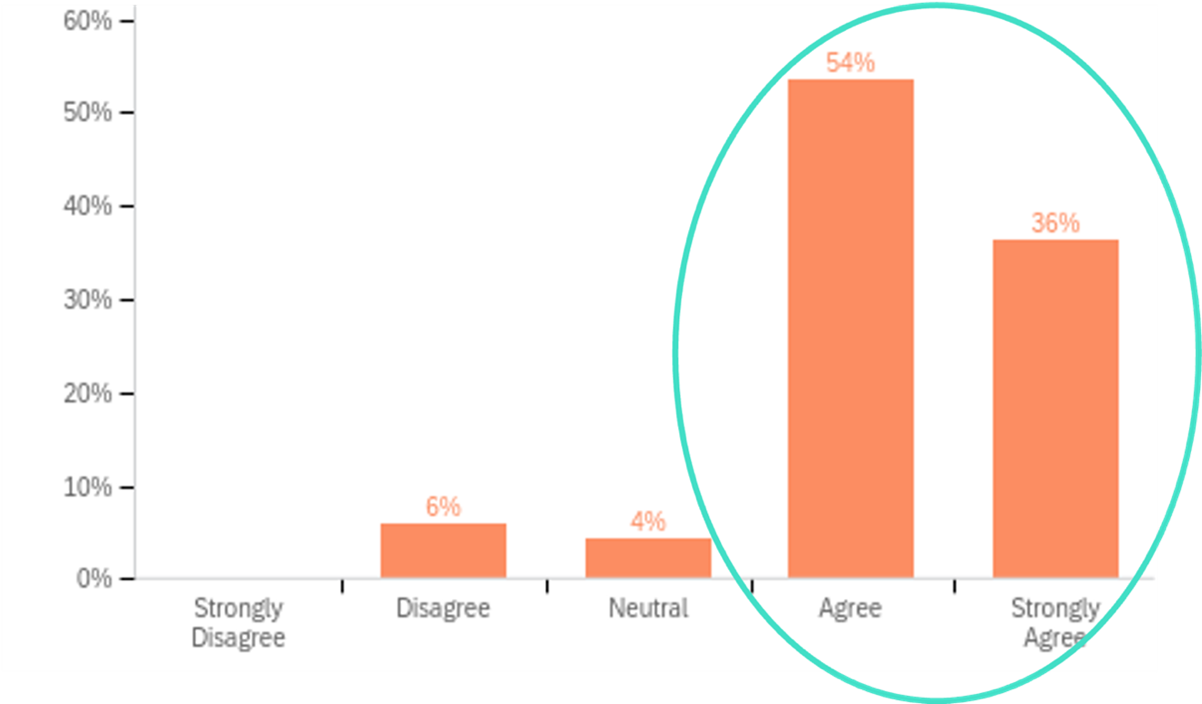
- 69% of participants Agreed or Strongly Agreed that they would recommend START Smart to other young adults with ADHD.
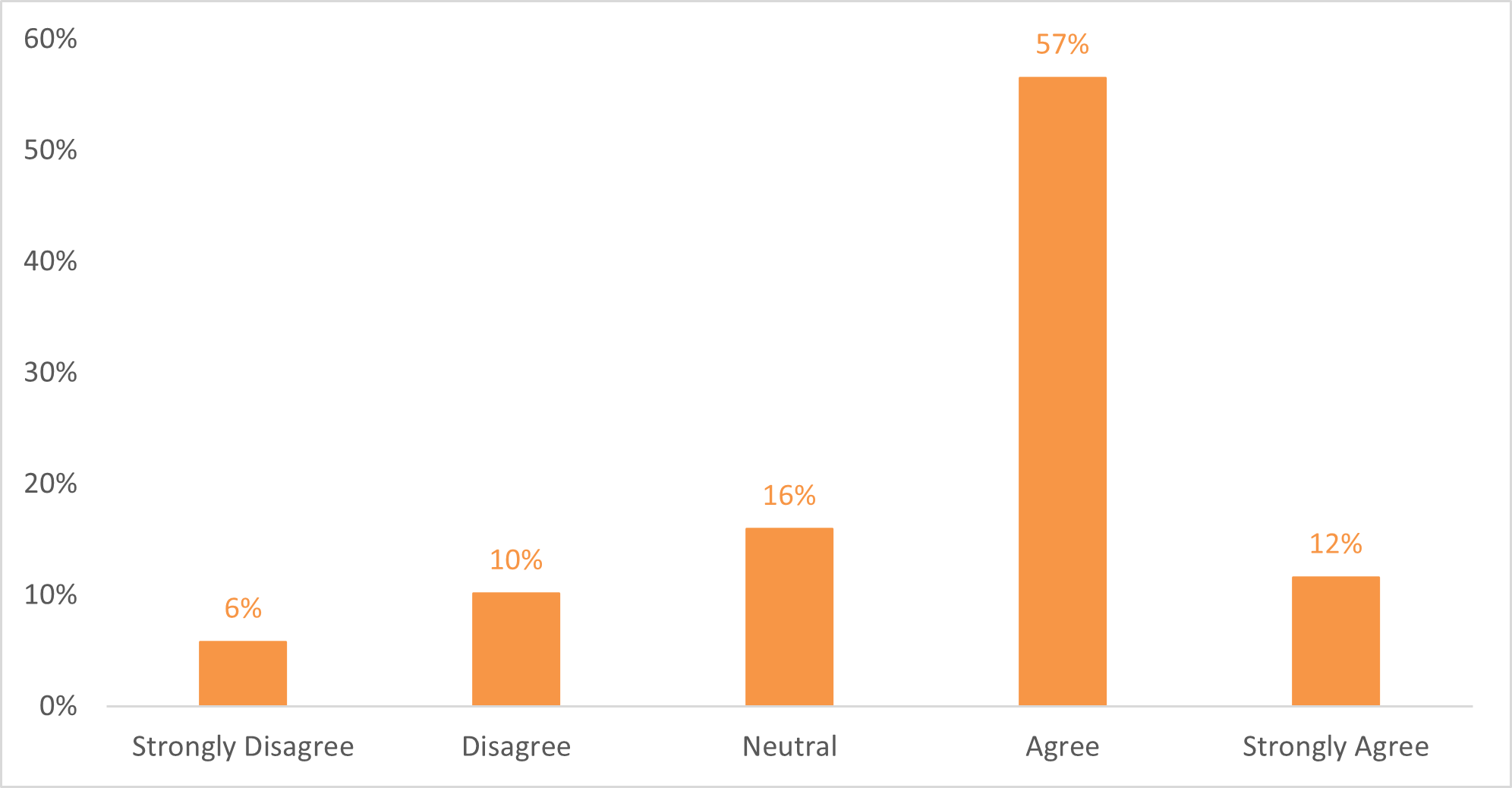
- When asked how START Smart was helpful, participants shared some of the following:
|
After a few times completing the survey, I noticed during the days what I was doing and how it would reflect on my survey and made me more aware... |
|
Answering the questions everyday was helpful because I was more aware of my symptoms as they were happening… |
|
…After the 3 weeks, I actually missed having the surveys to complete and found myself thinking about some of the symptoms that were on the survey randomly throughout the day. I was pleasantly surprised by this result. |
|
I actually started to realize what I was doing and what I had to dial back on. |
- For those who did not find it helpful, here are some examples of what they shared:
|
It wasn’t the most helpful to me because I didn’t always remember why the symptom I got feedback on was the way it was or how it had improved – I just didn’t often always remember my own behavior super well/in detail. |
|
It got tedious after a while. |
|
It was repetitive. |
|
I got really self-critical. |
We appreciate these insights and have tried to make changes to the intervention to address them. In particular, based on participants’ input and feedback from others (see below), we have added positive reflections and specific suggestions to help users manager their ADHD symptoms to help prevent feelings of negativity or self-criticism.
What suggestions did participants have for improving START Smart?
| Feedback | Made this change | Saving this change for the future |
|---|---|---|
| Change number of daily surveys - somewhere between 1 & 5 | X | |
| Make feedback into a graph | X | |
| Allow users to change or add their target ADHD symptom to get feedback on | X | |
| Instead of just asking what strategy would be helpful to manage ADHD, offer suggestions | X | |
| Make the surveys shorter | X | |
| The intervention could last longer | X | |
| Make it an actual app, & add in features like linking to calendar, notifications, and social support with other users | X | |
| Adjust timing of morning/evening surveys | X | |
| Allow for a longer time to respond to the surveys | X |
We heard you! We made a lot of the changes participants suggested for our next version of the intervention. Thank you very much to all our participants for their thoughtful input and creative suggestions!
What's next?
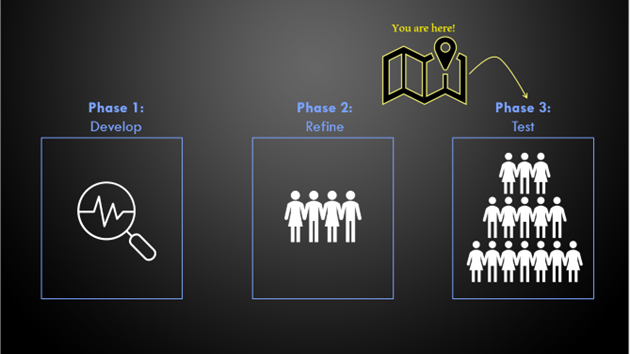
The data and feedback we received from START Smart was used to refine the smartphone intervention for the next phase of research, the TIPS Study (Training Inhibitory Control using Personalized Strategies). So far, we have made a lot of changes to the intervention, tested them out in a small group of young adults with ADHD, and worked closely with an advisory board of community partners. Using the feedback from those efforts, we have made further changes and improvements to the intervention. In the next phase of TIPS, 70 more young adults with ADHD will complete either the updated version of the smartphone intervention or a control intervention for 31 days to further test the feasibility of the intervention.
Acknowledgements
We’d like to extend a huge thank you to all our incredible participants who made this research possible. We truly cannot thank you enough for contributing your time, energy, and valuable feedback throughout the entire process.
The START Smart study was supported by the Klingenstein Third Generation Foundation, and the National Institutes of Health through Grant Number UL1 TR001857 (Pitt+Me).